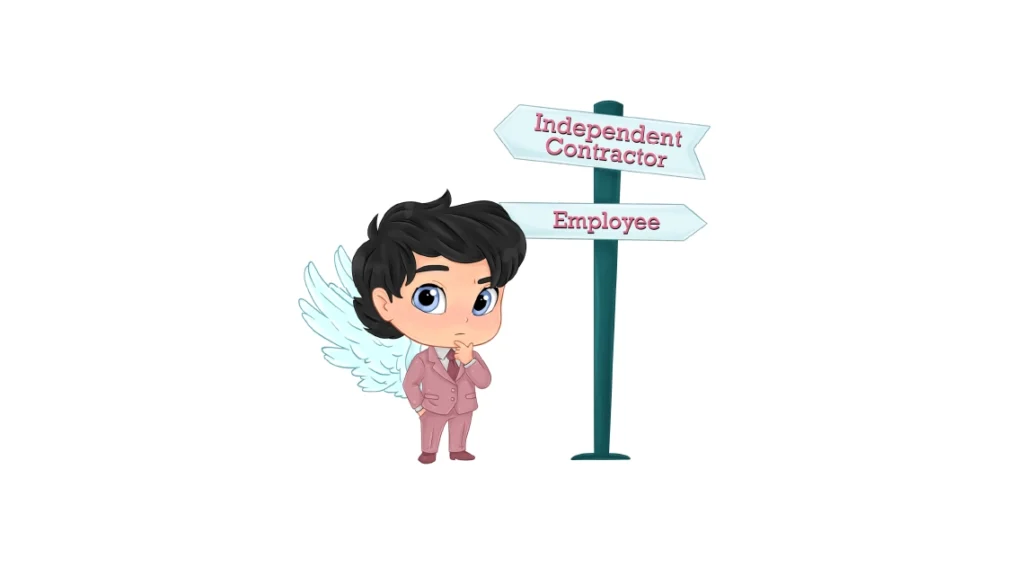
Are They a Contractor or an Employee? Here’s How to Tell
(Bookkeeping Angels Style — simple, supportive, no legal jargon)
Hiring people to help in your business is exciting — it means you’re growing!
But one of the biggest (and most expensive) areas small business owners get wrong is deciding whether a worker is an employee or a contractor.
And unfortunately…
You can’t choose based on what is easier, cheaper, or what the worker wants.
The ATO has strict rules, and if a worker is treated as a contractor but legally should be an employee, the penalties can be huge:
- Unpaid superannuation (plus interest & penalties)
- Backpay of leave + entitlements
- Fines from the ATO and Fair Work
So let’s break this down in a simple, practical way.
The Key Difference
An employee works in your business.
A contractor runs their own business.
That’s the core idea.
Now let’s look at what that looks like in real life.
How to Tell the Difference
1. Control Over Work
| Question | Employee | Contractor |
|---|---|---|
| Who controls how the work is done? | You do. | They decide how to complete the job. |
2. Tools + Equipment
| Question | Employee | Contractor |
|---|---|---|
| Who provides tools/materials? | The business supplies them. | They supply their own. |
3. Hours + Schedule
| Question | Employee | Contractor |
|---|---|---|
| Who decides when they work? | You set hours. | They choose when/how they work. |
4. Payment Structure
| Question | Employee | Contractor |
|---|---|---|
| How are they paid? | Hourly / weekly / salary | Quote, invoice, or contract rate |
5. Financial Risk
| Question | Employee | Contractor |
|---|---|---|
| Who wears the risk if something goes wrong? | You do. | They do. |
6. Superannuation
Even if they call themselves a “contractor”, you may still have to pay their super if:
- They are paid mainly for their labour
- They work personally (not subcontracting the work)
This is a very common area businesses get wrong.
Real-Life Example
Case 1:
Sam works full-time hours for you, uses your tools, works where you tell him, and you train him on how to do the job.
Sam is an employee.
Even if he has an ABN. Even if he wants to be paid as a contractor.
Case 2:
Jess runs her own business, provides her own tools, quotes you per job, works for other clients, and works when she chooses.
Jess is a contractor.
Why This Matters
If someone is classified incorrectly, the ATO can require the business to back-pay:
- Superannuation + 10% interest
- Leave entitlements
- PAYG withholding
- Payroll tax (if applicable)
It can get very expensive, very quickly.
So how do you protect your business?
- Use written agreements
- Clarify expectations upfront
- Review the ATO Contractor/Employee Decision Tool
- Ask your bookkeeper or accountant before hiring
Final Thoughts
This isn’t about making business harder — it’s about protecting:
- Your cash flow
- Your compliance
- Your peace of mind
If you’re unsure, ask.
It’s always easier (and cheaper!) to get it right from the start.